

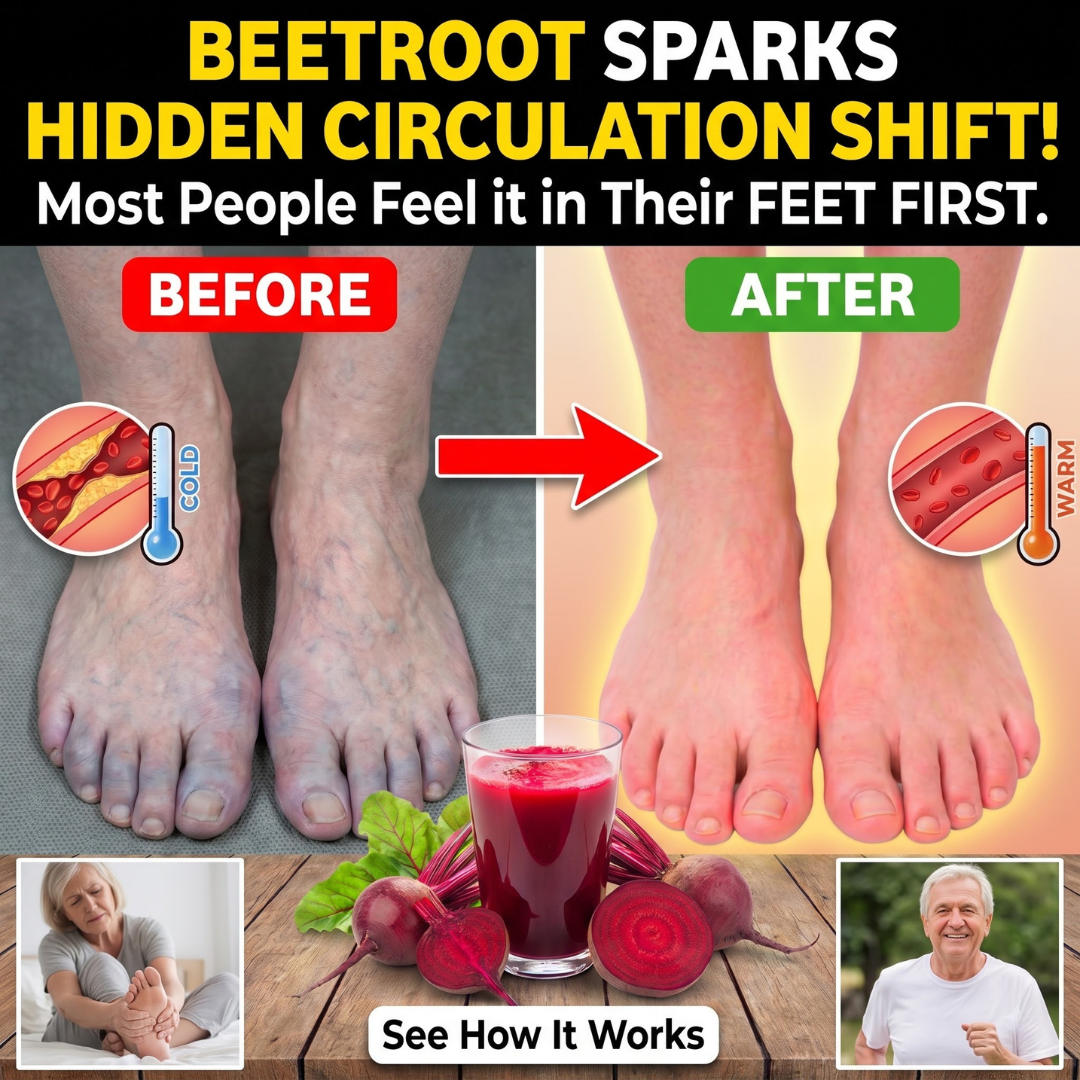
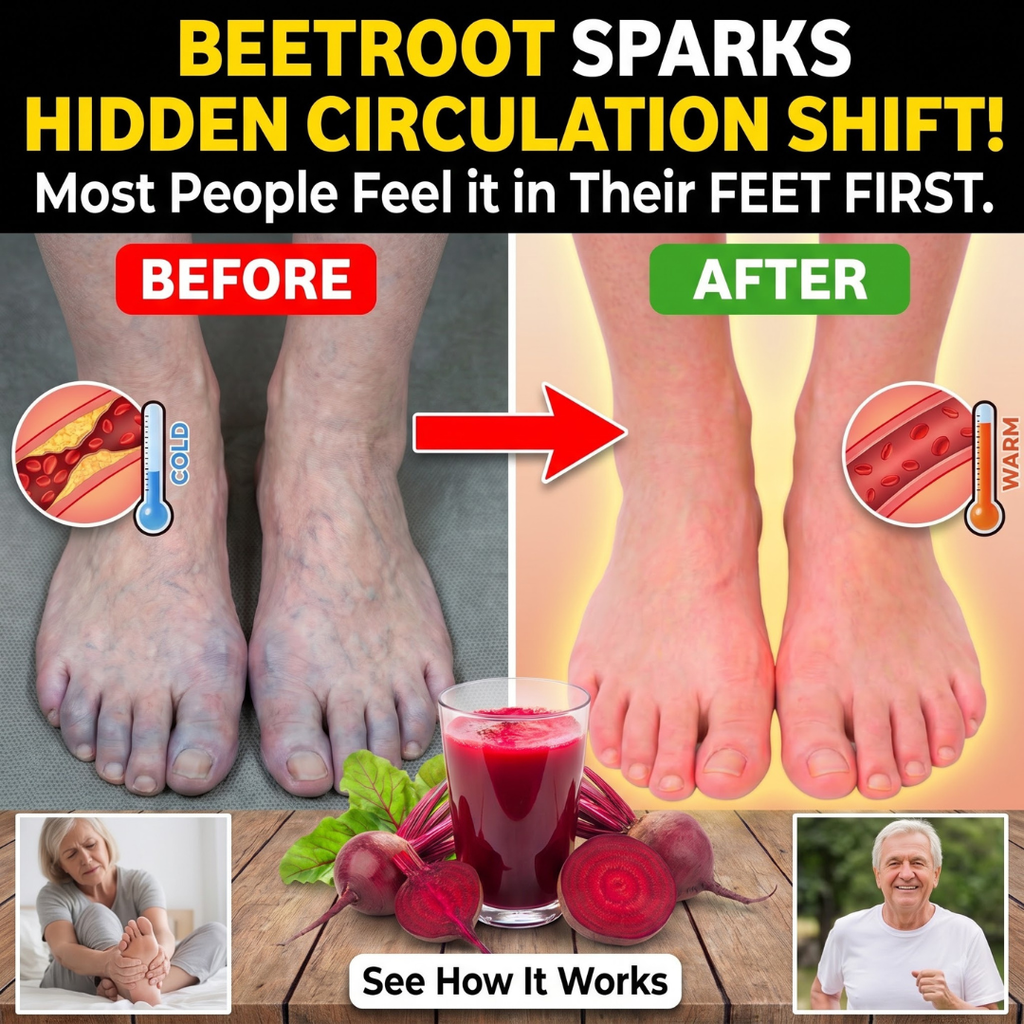
Beetroot doesn’t behave like an ordinary root vegetable once it’s inside you. Underneath that deep, earthy sweetness sits a compound called nitrate, and the body converts it into something with real force: nitric oxide, the exact signal that tells a blood vessel wall to stop clenching and let more blood through.
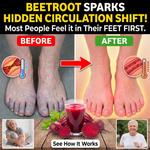
That’s why cold toes, tingling feet, and that dead, half-asleep feeling in the lower legs are so often the first clue something’s off — the feet sit at the farthest edge of the entire circulatory map, so they’re first to suffer when flow is tight, and first to feel it when something opens that flow back up.
What beetroot changes isn’t the color of your plate. It’s how wide the pipes are that carry blood to the parts of you the heart has to work hardest to reach.
The Nitric Oxide Switch Hiding in Plain Sight
Call it the Nitric Oxide Switch — the mechanism doing the real work here. Nitrate from beetroot gets converted, with help from bacteria on the back of the tongue, into nitric oxide, a molecule with one clear job: telling the smooth muscle in blood vessel walls to relax.
Picture a fire hose that’s been gripped too tight at the nozzle — water still comes out, but weaker, slower, spraying less distance than it should. A blood vessel under constant tension behaves the same way. It’s not broken. It’s just clenched, and clenched vessels move less blood to wherever they lead.
The cold feet, the tingling, the ankles that never quite feel “on” — none of that is random, and none of it is simply the price of getting older. It’s a body running its farthest deliveries through a nozzle it’s holding too tight.
But the vessel-widening story is only the visible half of it. There’s a second reason this shows up in the feet before anywhere else, and it has nothing to do with the vessels themselves.
Why Gravity Turns the Feet Into the First Casualty
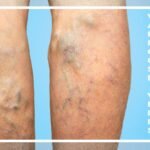
Blood has to fight its way back up from the feet against gravity every single hour of every single day, and any resistance along the way makes that uphill trip harder. That resistance shows up as heaviness, puffiness, and that dull, dragging ache that seems to live specifically behind the knees and across the shins.
Think of a delivery truck route that ends at the bottom of a steep hill. Every truck can make the trip, but the last stop on the route always waits longest and gets shorted first if anything slows the line down. The feet are that last stop.
Not because circulation has failed. Because the return trip has been running against resistance nobody addressed.
There’s no supplement company built around a beet, and there never will be — a root vegetable can’t be patented, branded, or sold in a sleek pump bottle for eighty dollars. That’s not proof it doesn’t work. It’s just proof that the cheapest, most effective tools rarely get a marketing budget behind them.
Where Men and Women Tend to Notice It Differently
Men often notice the shift in stamina first — a flight of stairs that used to leave the legs burning starts feeling like ordinary effort instead of a small emergency.
Women often notice it lower down and more directly, in the feet and ankles specifically — warmer feet at night, less of that tight, stretched feeling across the top of the foot after a long day standing.
Different entry points. Same nozzle, finally loosening.
The One Habit That Kills the Entire Mechanism
Here’s the part almost nobody explains, and it has nothing to do with the beetroot itself: antibacterial mouthwash can shut this whole pathway down.
The conversion from dietary nitrate into nitric oxide depends entirely on specific bacteria living on the back of the tongue. Rinse with a strong antibacterial mouthwash right before or after eating something nitrate-rich, and you can wipe out the very bacteria doing the conversion — several studies on heavy, twice-daily mouthwash users have found measurably reduced nitric oxide production and small upticks in blood pressure as a result.
If circulation is the reason you’re reaching for beetroot, skip the antibacterial rinse for an hour or two around it. Let the mechanism finish its work before it gets washed down the sink.
P.S. Beetroot isn’t the only nitrate-rich food doing this — and pairing it with the right one can push the effect further than beetroot manages alone. That pairing is worth knowing before you build a routine around beetroot by itself.
This article is for informational purposes only and does not replace professional medical advice. If you experience persistent cold feet, numbness, color changes, or leg pain that worsens with walking, see a doctor — these can signal a circulation condition that needs proper diagnosis. Beetroot can also interact with blood pressure medication and isn’t recommended for people prone to kidney stones; check with your doctor before making it a daily habit.