


Introduction
If you’re over 60, your kidneys are quietly working harder than they used to. Kidney function naturally declines with age, and what you eat for breakfast can either ease that workload or add to it. The good news: choosing the best breakfasts for kidney health after 60 doesn’t mean bland food or complicated recipes. In this guide, you’ll learn five kidney-friendly breakfast options, why they work, how much to eat, and mistakes to avoid — all backed by practical, doctor-friendly guidance.
Why Breakfast Matters for Kidney Health After 60
Kidney function typically declines by about 1% per year after age 40, according to research on age-related kidney changes. By 60, many adults have measurably reduced filtration capacity even without a diagnosed kidney condition. This makes the foods you eat first thing in the morning more important, not less.
Breakfast sets the tone for your sodium, protein, and fluid intake for the rest of the day. Many popular breakfast staples — bacon, processed cereals, deli meats, canned juices — are surprisingly high in sodium, phosphorus, or added sugar, all of which can strain aging kidneys over time. A kidney-conscious breakfast typically focuses on:
- Lower sodium (to help manage blood pressure, which directly affects kidney blood flow)
- Moderate, high-quality protein (too much protein can increase kidney workload; too little can lead to muscle loss)
- Balanced potassium and phosphorus (levels that may need to be watched more closely if kidney function is already reduced)
- Steady blood sugar (since diabetes is a leading cause of kidney decline)
If you already have chronic kidney disease (CKD), your specific limits on potassium, phosphorus, and protein will depend on your stage and lab results — always follow your nephrologist’s or renal dietitian’s individualized guidance rather than general advice like this.
The 5 Best Breakfasts for Kidney Health After 60
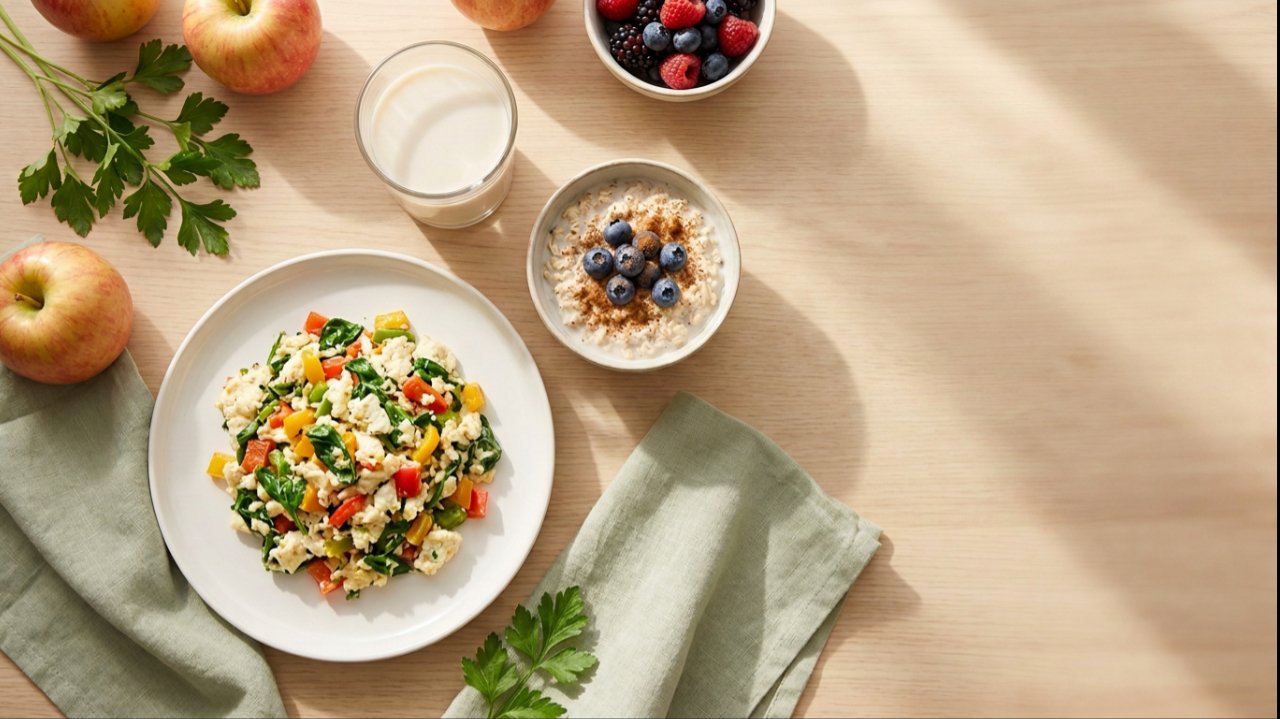
1. Egg White Veggie Scramble with Herbs
Egg whites offer high-quality protein without the phosphorus concentrated in the yolk. Two large egg whites provide about 7 grams of protein with roughly 110mg of phosphorus, compared to whole eggs which carry more phosphorus per serving.
How to make it: Whisk 3-4 egg whites with chopped bell peppers, spinach, and onion. Cook in a small amount of olive oil. Season with black pepper, garlic powder, and fresh herbs like chives or parsley instead of salt.
Why it works: This dish keeps sodium low naturally (under 100mg if no salt is added) while still delivering satisfying protein to help preserve muscle mass, which tends to decline with age.
2. Overnight Oats with Berries and Cinnamon
Plain rolled oats are naturally low in sodium and provide soluble fiber, which some research links to better blood sugar control — an important factor since diabetes is a major driver of kidney disease.
How to make it: Combine ½ cup (40g) rolled oats with unsweetened almond milk or rice milk, a handful of blueberries or raspberries, and a sprinkle of cinnamon. Refrigerate overnight.
Why it works: Berries are lower in potassium than bananas or oranges, making this a gentler choice if potassium needs to be monitored. Cinnamon adds flavor without sodium, and the recipe avoids added sugar found in flavored instant oatmeal packets.
3. Cottage Cheese and Cucumber Toast (Low-Sodium Version)
Cottage cheese offers protein in a softer, easy-to-digest form, but regular cottage cheese can be high in sodium — sometimes 300-400mg per half cup. Look for a low-sodium or no-salt-added version, which can cut that by more than half.
How to make it: Spread 3-4 tablespoons of low-sodium cottage cheese on a slice of whole grain toast. Top with thinly sliced cucumber, a crack of black pepper, and a light drizzle of olive oil.
Why it works: This breakfast balances protein and fiber while keeping sodium in check, provided you read labels carefully — sodium content varies enormously between brands.
4. Apple and Cinnamon Quinoa Bowl
Quinoa is a complete protein and, compared to many grains, tends to be moderate in phosphorus and potassium, though portion size still matters.
How to make it: Cook ½ cup (90g) quinoa in water, then top with diced apple, a dash of cinnamon, and a small drizzle of honey if desired. A tablespoon of chopped walnuts adds healthy fat.
Why it works: Apples are a lower-potassium fruit option compared to bananas, oranges, or melons, making this bowl a reasonable choice for those watching potassium intake, while still feeling substantial and warm.
5. Smoothie with Cauliflower, Berries, and Unsweetened Almond Milk
This may sound unusual, but riced or steamed cauliflower blends smoothly and adds volume and fiber without significantly raising potassium, unlike spinach or avocado-based smoothies.
How to make it: Blend ½ cup (60g) frozen cauliflower rice, ½ cup mixed berries, 1 cup unsweetened almond milk, and ice. Add a small scoop of unflavored or low-phosphorus protein powder if recommended by your doctor.
Why it works: It’s a fast option for mornings when cooking feels like too much, and it avoids the high-potassium fruits (bananas, kiwi) commonly used in typical smoothie recipes.
Practical Guidance: How Much and How Often
For most adults 60+ without diagnosed kidney disease, these breakfasts can be enjoyed daily as part of a balanced diet. A few practical rules of thumb:
- Protein per breakfast: Aim for roughly 15-20 grams unless your doctor has advised a specific target, especially if you have reduced kidney function.
- Sodium per breakfast: Try to stay under 300-400mg, since total daily sodium for kidney health is often recommended at under 2,300mg (about 1 teaspoon of salt).
- Fluids: Older adults sometimes under-drink water; check with your doctor about your ideal daily fluid intake, since needs vary if you have kidney or heart conditions.
- Frequency of high-potassium items: If you’ve been told to limit potassium, keep high-potassium fruits and vegetables (bananas, oranges, potatoes, tomatoes) to occasional use rather than daily.
If you have stage 3-5 CKD or are on dialysis, these general recipes may still need adjustment — a renal dietitian can tell you exactly how much protein, potassium, and phosphorus fits your individual lab results.
Common Mistakes to Avoid
- Assuming “healthy” cereal is kidney-friendly. Many bran and whole-grain cereals are surprisingly high in phosphorus additives and potassium. Check the ingredient list for phosphorus-containing additives (anything with “phos” in the name).
- Overdoing protein at breakfast. More protein isn’t automatically better for kidney health — for people with reduced kidney function, excess protein can accelerate strain on the kidneys over time.
- Relying on deli meats or bacon for convenience. These are among the highest-sodium breakfast choices and are best kept as an occasional treat rather than a daily habit.
- Skipping breakfast altogether. Long gaps without food can affect blood sugar stability, which indirectly affects kidney health, especially in those with diabetes or prediabetes.
- Not checking sodium content on “healthy” packaged items. Instant oatmeal packets, flavored yogurts, and pre-made smoothies often hide significant sodium or sugar.
Frequently Asked Questions
Is oatmeal good for kidney health? Plain oatmeal is generally considered a kidney-friendly breakfast because it’s naturally low in sodium and provides fiber. However, portion size matters, and if potassium is a concern, moderate portions (around ½ cup cooked) are usually preferred over large servings.
How much protein should someone over 60 eat for breakfast if they have kidney concerns? This varies significantly based on kidney function stage and should be personalized by a doctor or renal dietitian. As a general guideline for adults without diagnosed CKD, 15-20 grams at breakfast is a reasonable starting point.
Are eggs bad for kidneys? Whole eggs aren’t necessarily bad, but the yolk contains more phosphorus than the white. Egg whites offer a way to get quality protein with less phosphorus, which may be preferable for those managing kidney-related phosphorus limits.
What fruits should I avoid for breakfast if I have kidney disease? Bananas, oranges, cantaloupe, and dried fruits tend to be higher in potassium. Berries, apples, and grapes are generally lower-potassium options, though individual limits should be confirmed with a healthcare provider.
Conclusion
A kidney-friendly breakfast after 60 doesn’t have to be complicated or restrictive — small swaps like using egg whites instead of whole eggs, choosing low-sodium cottage cheese, or picking berries over bananas can make a real difference over time. As a next step, try rotating through these five options for one week and pay attention to how you feel, then talk to your doctor or a renal dietitian about tailoring portions to your specific lab results.